ADHD Dopamine: What the Connection Really Means
If you have searched for ADHD dopamine, you have probably seen two very different stories. One says ADHD is simply "low dopamine." Another says the dopamine explanation is an internet myth. The more useful answer sits between those extremes: dopamine matters, but ADHD is not a single-chemical problem. It involves attention, motivation, timing, reward learning, sleep, stress, environment, and other brain systems working together. If you are trying to make sense of repeated focus struggles, impulsive choices, or energy crashes, an online ADHD trait screening can help you organize patterns before you decide what kind of support to explore next.
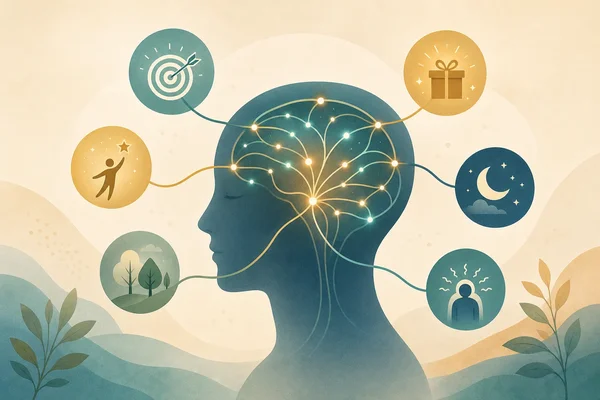
What dopamine does in attention, motivation, and reward
Dopamine is a neurotransmitter, which means it helps brain cells communicate. In everyday language, it is often described as the "pleasure chemical," but that label is too narrow. Dopamine is involved in reward, movement, learning, memory, alertness, anticipation, and the effort it takes to begin or continue a task.
For ADHD, the most relevant idea is not constant pleasure. It is regulation. A task can be important and still feel almost physically hard to start when the brain does not register enough urgency, novelty, or reward. Another task can feel impossible to stop because it is fast, interesting, social, risky, or constantly changing. That difference is one reason people talk about ADHD dopamine dysregulation.
This does not mean a person with ADHD is lazy or careless. It means the "go signal" for action may be inconsistent. Motivation can arrive late, spike under pressure, disappear during routine work, and return when a deadline, game, conversation, or new idea adds stimulation.
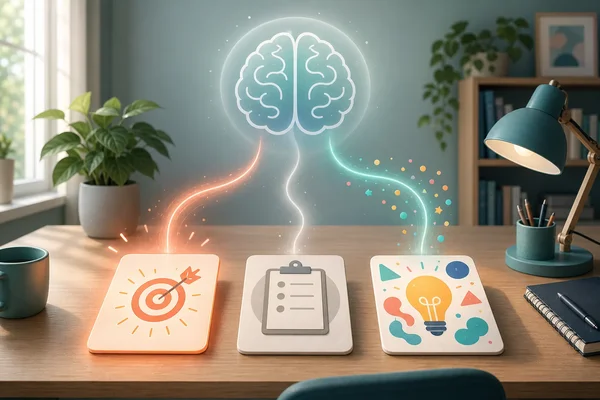
Is ADHD caused by low dopamine?
ADHD is not best understood as simply low dopamine or high dopamine. Research points to altered dopamine signaling in some ADHD-related circuits, especially those involved in reward and motivation, but the evidence does not support a simple universal dopamine deficiency story. Different brain regions, ages, medications, sleep patterns, and co-occurring conditions can all affect what researchers observe.
That nuance matters because the phrase "low dopamine ADHD" can make people look for a single fix. It can also make everyday choices feel moral: good habits create "healthy dopamine," while screens, snacks, spending, or conflict create "bad dopamine." The brain is more complicated than that. Dopamine is not a toxin, and pleasure is not automatically harmful.
A better question is: where does regulation break down? Some people notice that boring tasks feel unrewarding until there is pressure. Others get pulled toward novelty, interruption, or rapid feedback. Some feel mentally flat after intense focus or a highly stimulating event. These patterns may involve dopamine, but they also involve executive function, emotional regulation, sleep, sensory load, stress hormones, and norepinephrine.
Dopamine, norepinephrine, and the ADHD motivation gap
Dopamine and norepinephrine are often discussed together in ADHD because both are involved in attention, alertness, and goal-directed behavior. Many ADHD medications affect one or both systems, which is part of why the dopamine question appears so often in treatment conversations. Still, medication response does not prove that ADHD is only a dopamine issue. A treatment can improve communication in a system without revealing one simple cause.
The motivation gap in ADHD often looks confusing from the outside. A person may spend hours on a hobby, research spiral, or urgent project, then struggle to answer a simple email. That unevenness is not about how much the person cares. It is often about how the task is coded by the brain: immediate or delayed, concrete or vague, novel or repetitive, emotionally loaded or neutral.
When you review these patterns with an ADHD self-reflection tool, it can help to look beyond one bad day. Useful observations include:
- Which tasks become easier with urgency, novelty, movement, or company?
- Which tasks collapse when the reward is delayed or invisible?
- Do focus problems appear across work, school, home, and relationships?
- Do energy crashes happen after overstimulation, poor sleep, conflict, or long periods of masking?
- Are impulsive choices linked to boredom, emotion, stress, or quick reward?
This kind of pattern map is often more useful than asking whether your dopamine is "too low." It turns a vague chemical story into specific daily-life signals you can discuss, track, and adjust.
Natural ways to support dopamine without chasing a reset
Many people search for natural ways to increase dopamine ADHD because they want practical options that do not start with medication. Lifestyle changes cannot replace professional care when someone needs it, and they do not work the same way for everyone. They can, however, make attention and motivation easier to support.
Start with sleep. ADHD and sleep problems often feed each other: poor sleep can reduce attention, increase emotional reactivity, and make ordinary tasks feel heavier. A consistent wake time, a lower-stimulation wind-down routine, and fewer late-night task traps can support the brain systems involved in focus.
Movement is another useful lever. Exercise does not need to be intense to matter. A brisk walk, short workout, dance break, stretching session, or active errand can add stimulation and reduce restlessness. For ADHD, the best movement plan is usually the one that is easy enough to repeat.
Food can also matter, though it should not be framed as a dopamine fix. Regular meals with protein, fiber, and enough overall calories may reduce crashes that feel like "no motivation." Some people experiment with tyrosine-rich foods because tyrosine is involved in dopamine production, but supplements and major diet changes are best discussed with a qualified professional, especially if you take medication or have other health conditions.
Task design may be the most ADHD-specific strategy. You can make low-reward tasks more workable by adding structure: a timer, a visible checklist, a first step that takes less than two minutes, a body-doubling session, background sound, or a small reward after completion. This is not tricking yourself. It is designing the environment so the task gives your brain clearer cues.

ADHD dopamine detox and dopamine addiction myths
"Dopamine detox" is a popular phrase, but it is misleading for ADHD. You cannot detox from dopamine; your brain needs it for basic functioning. Taking breaks from highly stimulating apps, games, or feeds may help some people regain attention, but that is better described as reducing interruptions and rebuilding habits, not removing dopamine.
The phrase "dopamine addiction" is also easy to misunderstand. People can develop compulsive patterns around gambling, substances, shopping, pornography, games, or social media. Those patterns deserve care and support. But being "addicted to dopamine" is not an accurate way to describe ADHD. Dopamine is part of normal brain signaling, not an external drug.
A safer approach is to ask what the behavior is doing for you. Is it relieving boredom? Avoiding shame? Adding social contact? Creating urgency? Giving quick feedback? Once you know the function, you can replace the pattern more intelligently. For example, if late-night scrolling provides decompression, a harsh ban may backfire. A more realistic plan might be a charging station outside the bed, a short audio routine, and a planned morning reward for stopping earlier.
If a behavior feels out of control, causes financial risk, damages relationships, or becomes hard to stop despite consequences, it is worth seeking professional support. ADHD can overlap with anxiety, depression, substance use concerns, sleep problems, and other conditions that require a broader plan than dopamine tips.

When dopamine questions should lead to a broader ADHD reflection
The ADHD dopamine conversation is most helpful when it leads to better self-observation, not self-blame. Instead of asking, "How do I get more dopamine?" try asking, "Which situations make attention, effort, and emotional control easier or harder for me?"
You might write down three recent examples: one task you avoided, one task you could not stop, and one moment when your energy crashed. For each, note sleep, stress, timing, reward, emotion, environment, and whether another person was involved. Patterns often become clearer when they are seen together.
If those patterns are frequent, long-running, and disruptive across more than one area of life, a private ADHD assessment starting point can help you reflect on traits in a structured way. Use the results as educational information and, if needed, as a conversation starter with a qualified professional. Dopamine may be part of the picture, but your daily context, history, strengths, and support needs matter just as much.
FAQ
Is ADHD caused by low or high dopamine?
ADHD is not simply caused by low or high dopamine. Research suggests dopamine signaling may work differently in ADHD-related circuits, especially those tied to reward, motivation, and attention. But ADHD also involves norepinephrine, executive function, brain networks, genetics, environment, sleep, stress, and development. A simple low-dopamine explanation is easier to remember, but it is not complete enough to guide good decisions.
How do people with ADHD get dopamine?
Everyone's brain produces dopamine naturally. People with ADHD may notice stronger pulls toward activities that provide novelty, urgency, movement, social feedback, or quick reward. Helpful supports can include sleep routines, regular movement, meals that prevent energy dips, structured tasks, body doubling, visible checklists, and professional care when appropriate. The goal is not to chase dopamine all day; it is to make attention and motivation more stable.
What does dopamine feel like in ADHD?
You cannot directly feel dopamine as a single sensation. What people often describe is the experience around reward and stimulation: sudden interest, a burst of energy, easier task initiation, intense focus, restlessness when bored, or a crash after a highly stimulating period. Those feelings can be real without proving that dopamine alone explains them.
Do people with ADHD get tired easily?
Some do. Tiredness can come from poor sleep, mental effort, emotional regulation, overstimulation, masking, co-occurring anxiety or depression, medication timing, or ordinary life demands. It is not always a dopamine crash. If fatigue is persistent, intense, or new, it is sensible to discuss it with a qualified healthcare professional.
Can dopamine supplements help ADHD?
There is no supplement that reliably fixes ADHD by raising dopamine. Some nutrients are involved in neurotransmitter production, but supplements can interact with medications and may not address the main problem. If you are considering tyrosine, iron, magnesium, omega-3s, or any product marketed for dopamine, talk with a qualified professional first, especially for children, pregnancy, heart concerns, or existing prescriptions.
Is dopamine detox useful for ADHD?
A strict dopamine detox is not a proven ADHD treatment, and the name is inaccurate. However, reducing constant interruptions can help attention. Instead of trying to remove pleasure, focus on practical boundaries: fewer nonessential notifications, planned breaks, app limits that you can actually follow, and replacement activities that offer rest, movement, or connection.
How is ADHD dopamine different from Parkinson's?
Both topics involve dopamine, but they are very different conditions. Parkinson's disease involves loss of dopamine-producing cells in movement-related pathways. ADHD is a neurodevelopmental condition involving attention, impulsivity, motivation, and self-regulation across multiple systems. This is one reason "dopamine deficiency" is too vague to explain ADHD by itself.