ADHD vs. Depression: Key Differences in Symptoms and ADHD Assessment Guidance
ADHD and Depression Symptoms: Understanding the Overlap
Do your struggles with focus and motivation stem from ADHD, depression, or both? If you find yourself asking this question, you are not alone. Many adults feel trapped in a confusing cycle of symptoms. Are their struggles with concentration, energy, and mood caused by ADHD or depression? The overlap makes it hard to know.
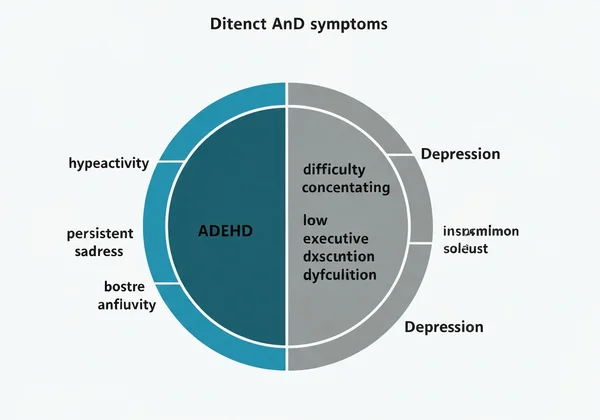
These two conditions share symptoms like difficulty concentrating, a mental tug-of-war with tasks (often called executive dysfunction), and feelings of being overwhelmed. However, the root causes and core experiences are often very different. Understanding these distinctions is the first crucial step toward gaining clarity and seeking the right kind of support.
This guide is designed to help you unpack the key differences and commonalities between adult ADHD and depression. We will explore how to differentiate the symptoms so you can make an informed decision about your next steps. An initial screening, like a confidential online assessment, can be an invaluable tool on this journey, providing personalized insights to guide your conversation with a healthcare professional.

ADHD vs. Depression Symptoms: Common Overlaps & Key Distinctions
To tell ADHD and depression apart, it’s essential to first understand the core characteristics of each. While they can look similar on the surface, their underlying nature is distinct.
Understanding Core Symptoms of ADHD in Adults
ADHD is a neurodevelopmental disorder, meaning it begins in childhood and persists into adulthood. It is characterized by a consistent pattern of inattention, hyperactivity, and impulsivity that interferes with daily functioning.
For adults, these symptoms often look like:
- Inattention: Difficulty staying focused on tasks (especially boring ones), being easily distracted, forgetfulness in daily activities, losing things frequently, and struggling with organization and time management.
- Hyperactivity: A feeling of inner restlessness, fidgeting, an inability to stay seated, or talking excessively. In adults, this can be more subtle than in children.
- Impulsivity: Making hasty decisions without thinking through the consequences, interrupting others frequently, or having trouble waiting your turn.
A key feature of ADHD is that these challenges are chronic and have been present for most of a person's life.
Recognizing the Hallmarks of Depression in Adults
Depression is a mood disorder characterized by a persistent feeling of sadness and a loss of interest or pleasure in previously enjoyed activities (a symptom known as anhedonia). Unlike the lifelong pattern of ADHD, depression can develop at any time and often occurs in episodes.
The hallmarks of depression include:
- Persistent Low Mood: A pervasive sense of sadness, emptiness, or hopelessness that lasts for most of the day, nearly every day.
- Loss of Interest or Pleasure: A lack of motivation or enjoyment in hobbies, social activities, and work.
- Changes in Sleep and Appetite: Sleeping too much or too little, or significant weight loss or gain.
- Fatigue or Low Energy: A profound sense of tiredness that isn’t relieved by rest.
- Feelings of Worthlessness or Guilt: Harsh self-criticism and dwelling on past failures.
Where Symptoms Intersect: Focus, Motivation, and Executive Function
The confusion between ADHD and depression often comes from a few key areas where symptoms seem to mirror each other. Here’s a closer look at the overlap:
-
Difficulty Concentrating:
- In ADHD: Concentration wanes because the brain is easily pulled away by external distractions or new, more interesting internal thoughts. The mind feels like it has too many tabs open at once.
- In Depression: Concentration is difficult because of low energy, mental fog, and internal preoccupation with negative thoughts and feelings of hopelessness.
-
Low Motivation:
- In ADHD: Motivation is inconsistent and interest-driven. A person with ADHD might hyperfocus for hours on a passion project but be unable to start a boring-but-important task.
- In Depression: Motivation is consistently low across almost all activities. Even things that used to bring joy feel like a chore.
-
Executive Dysfunction:
-
In ADHD: This is a core feature, involving lifelong struggles with planning, prioritizing tasks, and managing time.
-
In Depression: Executive function can become impaired during a depressive episode due to fatigue and a lack of mental energy, but it may improve significantly when the depression lifts.
-
How to Differentiate ADHD & Depression for Informed Mental Health Screening
Beyond the core symptoms, looking at the context, timeline, and emotional texture of your experience can provide powerful clues. This can help you decide whether an ADHD assessment or a different type of mental health screening is your most logical next step.
Examining the Onset and Persistence of Symptoms
One of the most significant differentiators is the timeline. Ask yourself: When did these challenges begin?
- ADHD symptoms are lifelong. Adults seeking a diagnosis often look back and realize they've "always been this way." They can recall struggling with focus, organization, or restlessness in school, even if they were never formally diagnosed.
- Depression often has a more defined starting point. While some people experience chronic, low-grade depression, major depressive episodes typically begin in adolescence or adulthood and can sometimes be linked to a specific life event or period of stress.
Context Matters: Situational vs. Pervasive Challenges
Consider where and when your symptoms show up.
- ADHD challenges tend to be pervasive. The difficulties with focus, impulsivity, and organization are present across various settings—at work, at home, and in social situations. They are part of the person's fundamental way of operating in the world.
- Depression can feel more situational or cyclical. While its impact is broad, the intensity of the symptoms can fluctuate. Someone with depression may find their lack of focus is deeply tied to their low mood, rather than being a constant feature of their personality.
The Role of Emotional Dysregulation in Both Conditions
Both ADHD and depression can involve intense emotions, but the pattern is often different.
-
In ADHD: Emotional dysregulation often manifests as quick, strong reactions to events. This can include flashes of anger, intense frustration over small things, or extreme sensitivity to perceived rejection (Rejection Sensitive Dysphoria). These feelings are often powerful but may pass relatively quickly.
-
In Depression: The emotional state is more of a sustained, heavy blanket. It includes persistent sadness, irritability, and a general flatness or numbness that colors the entire experience for weeks or months.
Deciding on an Assessment: ADHD or Depression, or Both?
Understanding these nuances can help you decide which path to explore first. Your goal? Gather insights about your symptoms. These details prepare you for a productive conversation with a healthcare provider.
When an ADHD Assessment is the Primary Next Step
Consider prioritizing an ADHD screening if you identify with the following:
- Your struggles with focus, organization, and restlessness have been a consistent theme since childhood.
- Your motivation is highly dependent on how interesting or urgent a task is.
- You feel an inner sense of restlessness even when you seem calm on the outside.
- You have a history of making impulsive decisions that you later regret.
If this sounds familiar, taking a science-backed online ADHD assessment can be an excellent way to organize your thoughts and see if your experiences align with common ADHD traits.
Considering a Depression Screening or Professional Evaluation
Prioritizing a depression screening or a consultation with a doctor might be more appropriate if:
- Your primary experience is one of persistent sadness, hopelessness, or emptiness.
- You’ve lost interest and pleasure in nearly all activities you used to enjoy.
- Your symptoms began more recently (within the last few months or years) rather than being a lifelong pattern.
- You are experiencing significant changes in your sleep, appetite, or energy levels.
Understanding Comorbidity: Can You Have Both?
It is very common for someone to have both ADHD and depression. This is called comorbidity. Untreated ADHD often causes lifelong struggles—like academic hurdles or job stress. These challenges can spiral into feelings of failure or depression.
For this reason, it's important to address both possibilities. Often, identifying and treating the underlying ADHD—a process that can start with a comprehensive ADHD assessment—can alleviate some of the symptoms that were contributing to depression.
Your Next Steps to Clarity: Taking the First Assessment Step
Untangling the symptoms of ADHD and depression can feel overwhelming, but seeking clarity is a powerful and proactive step toward better well-being. By understanding the key differences in symptom onset, context, and emotional experience, you are already better equipped to advocate for yourself.
The most important takeaway is that you don't have to figure this out alone. Starting with a structured self-assessment provides valuable data points to guide you. It helps transform vague feelings of "something is wrong" into specific insights you can act on. Our ADHD assessment helps clarify the very symptoms affecting your daily life.
If you’re recognizing yourself in these patterns, our confidential ADHD assessment can help you articulate your experiences before talking to a professional. It provides a clear, personalized report you can use to start a productive conversation about your mental health.

Disclaimer: This article is for informational purposes only and does not constitute medical advice. The online tool is a screening assessment, not a diagnostic tool. Please consult with a qualified healthcare professional for any medical concerns or before making any decisions related to your health or treatment.
Frequently Asked Questions About Differentiating ADHD & Depression
How can I tell if my focus issues stem from ADHD or depression?
The key difference lies in the nature and timeline of the symptoms. ADHD is a lifelong neurodevelopmental condition characterized by chronic patterns of inattention, hyperactivity, and impulsivity. Depression is a mood disorder defined by persistent sadness, loss of interest (anhedonia), and low energy, which often occurs in episodes.
Is it possible to have both ADHD and depression?
Yes, it is very common. This is called comorbidity. The daily frustrations and challenges of living with untreated ADHD can often contribute to the development of secondary conditions like anxiety and depression.
How does an online ADHD assessment differ from a depression screening?
An online ADHD assessment focuses on patterns of behavior related to attention, organization, restlessness, and impulsivity, often asking about experiences from childhood to the present. A depression screening focuses more on your emotional state, mood, energy levels, and feelings of hopefulness over the past few weeks or months.
Is this online assessment a formal ADHD diagnosis?
No, it is not. Our platform provides a scientifically-backed screening tool designed to help you identify whether your symptoms are consistent with ADHD. This is a valuable first step. A formal diagnosis must be made by a qualified healthcare professional, such as a psychiatrist or psychologist, after a comprehensive evaluation. You can use the results from our ADHD self assessment to start that conversation.
What should I do after completing an ADHD or depression screening?
After completing any initial screening, the most important next step is to discuss the results with a doctor, therapist, or psychiatrist. They can conduct a full evaluation, consider all factors, and provide an accurate diagnosis and guidance on appropriate treatment options.