Attention Deficit Disorder Treatment Without Drugs: A Practical Support Plan
Searching for attention deficit disorder treatment without drugs often means looking for practical relief, not a one-size-fits-all answer. The term ADD is still widely used, although clinicians now generally use ADHD, predominantly inattentive presentation, within the broader ADHD framework. Whether attention challenges are new, long-standing, or simply difficult to name, daily supports can make routines feel more workable.
Non-medication approaches are not a promise to erase ADHD traits, and they are not a replacement for an individualized conversation with a qualified clinician. They can, however, help you build skills, adjust your environment, and identify what deserves more support. If you are sorting through persistent patterns, an ADHD self-reflection starting point can help you organize observations before deciding what to discuss with a professional.

What non-medication support can and cannot do
ADHD affects people differently, so “without medication” is not one plan. For some people, non-pharmacological support is a first step while they seek assessment. For others, it is part of a broader plan alongside medication, therapy, school accommodations, or workplace changes. A helpful goal is not forcing yourself to work like someone else; it is reducing friction in the tasks that matter to you.
Start by naming the functional problem. Is it beginning work, estimating time, remembering appointments, shifting between tasks, regulating frustration, or winding down at night? A strategy is easier to evaluate when it is tied to one situation and one observable outcome. “I want better focus” is broad. “I want to start my expense report within 10 minutes after opening my laptop” gives you something specific to test.
Be cautious with claims that a supplement, diet, app, or gadget can resolve ADHD on its own. “Natural” does not automatically mean effective or safe, and supplements can interact with medicines or be inappropriate for some health conditions. A pharmacist or clinician can help you weigh those choices, especially for children, pregnancy, or other ongoing care.
Build external structure before relying on willpower
Executive-function challenges can make invisible tasks feel unusually hard to hold in mind. External structure moves reminders, decisions, and next steps out of memory and into the environment. This is a core idea in ADHD alternatives to medication: make the desired action easier to see and simpler to begin.
Use one trusted capture point
Choose one place for incoming tasks: a notebook, calendar, or task app. The best system is the one you will actually open. Put appointments and deadlines there immediately, then give tasks a next action rather than a vague label. Replace “sort taxes” with “find last year’s return” or “email accountant for the checklist.”
Shrink the starting line
When a task feels heavy, set a deliberately small entry step: open the document, put laundry in one basket, or work for five minutes. A visible timer can provide a boundary, while a short reset break makes the next round less daunting. If you stop after five minutes, you still completed the planned first action; if you continue, that is a bonus.
Design the space to prompt the behavior
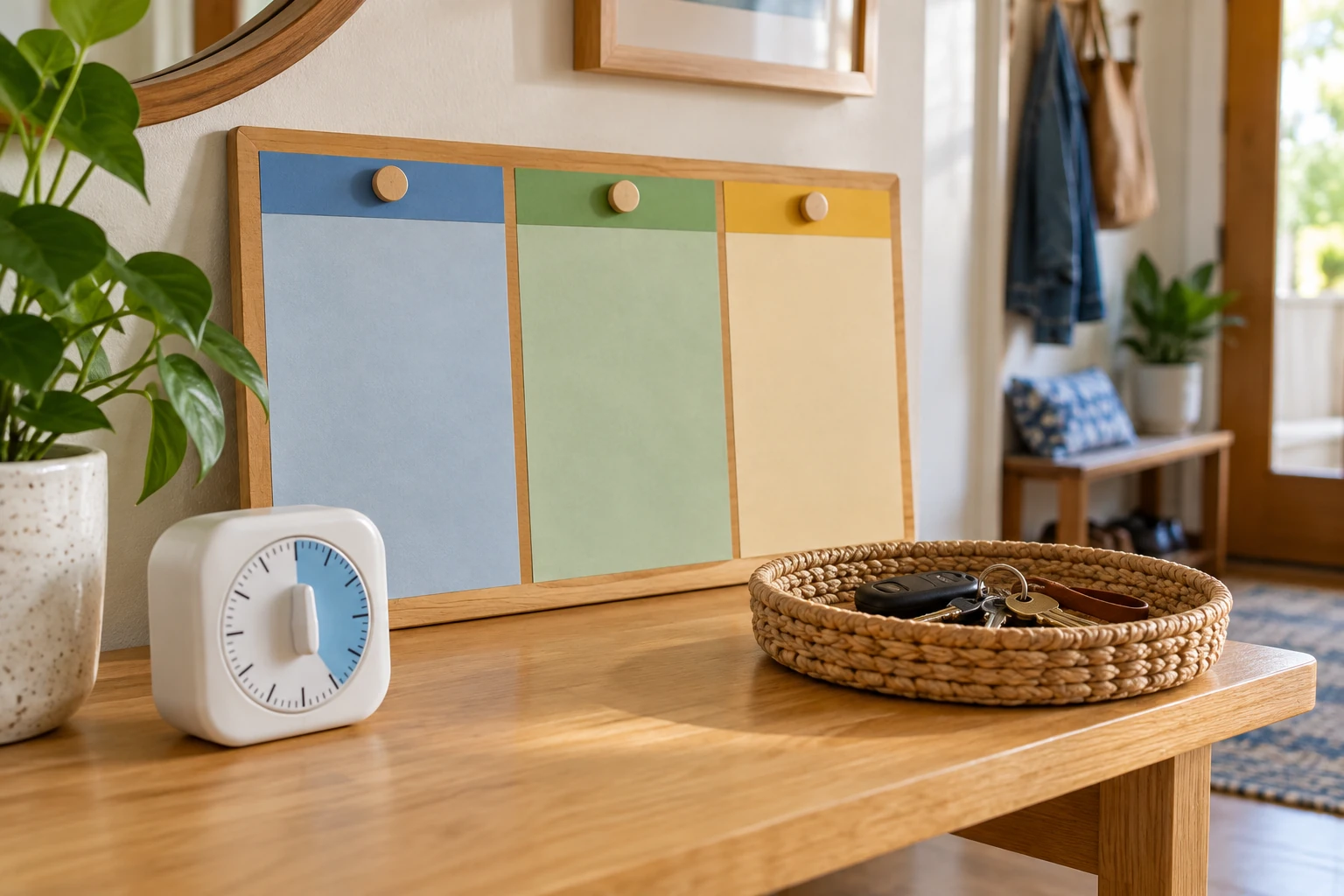
Put the charging cable where you use it, keep the morning checklist by the door, and store commonly used items where you naturally reach for them. Reduce the number of choices at the moment you need to act. A “landing zone” for keys and a prepared work surface may sound small, but they remove repeated search-and-decide moments from the day.

Support attention with movement, sleep, and steady basics
Lifestyle habits are not moral tests, and they should not be presented as a fix-all. They can still support energy, mood, and attention capacity. Aim for changes that are realistic enough to repeat, rather than a complete life overhaul on Monday morning.
Make movement easy to begin
Many people find that brief, enjoyable movement helps them transition into a task or release restless energy. That might be a walk before a meeting, music and stretching between study blocks, or a class with a friend. Choose the form and timing you are most likely to repeat. Treat it as a support for your day, not a punishment for being distracted.
Protect a repeatable wind-down
Sleep difficulties and attention problems can overlap, and poor sleep can make concentration and emotional regulation harder for anyone. Instead of chasing an ideal routine, choose one anchor: a consistent wake time, a screen-free ten minutes before bed, or a reminder to start winding down. If snoring, severe daytime sleepiness, persistent insomnia, or other sleep concerns are present, raise them with a healthcare professional.
Feed the day predictably
Regular meals, water within reach, and simple snacks can reduce the extra decisions that derail a busy day. This is not an argument for restrictive diets or unproven claims. If you are considering major dietary changes, supplements, or elimination plans, get individualized advice first—particularly for a child or someone with a medical condition.
Skills-based support for adults and families
Non medication ADHD treatment for adults often focuses on learning usable skills in context. A licensed therapist may help with emotional responses, self-criticism, routines, or conditions that can coexist with attention difficulties. ADHD-informed cognitive behavioral approaches can focus on practical planning, task initiation, and thinking patterns that make avoidance stronger. Coaching can be another option for building routines and accountability, though it is not a substitute for clinical care.
When you want to turn scattered examples into useful conversation notes, an ADHD pattern reflection tool may offer a gentle structure. It is for learning and self-reflection, rather than for making a medical determination.
For children and teens, support often involves the adults and settings around them. Parent training, classroom strategies, clear routines, and school-based supports can be important topics to discuss with qualified professionals and educators. Avoid copying an adult productivity system onto a child; development, school demands, family circumstances, and safety all matter.
Support groups can also be useful for sharing practical ideas and reducing isolation. Look for clear boundaries, facilitators with relevant experience when appropriate, and advice that does not pressure people to stop medical care. Peer experience can be valuable, but it is not personalized medical guidance.
Try a two-week experiment, not a total makeover
The most useful ADHD treatment without medication plans are often modest and measurable. Give one strategy enough time to learn from it, then adjust. A two-week experiment can keep the process concrete:
- Pick one friction point, such as missed morning tasks or an avoided email queue.
- Choose one support, such as a door checklist, a 10-minute timer, or a co-working session.
- Define a small measure: days used, time to start, or how often you found what you needed.
- Review what helped, what got in the way, and whether the support needs to be smaller, more visible, or timed differently.
Avoid judging a strategy only by productivity. A better question is whether it made the task less exhausting, more predictable, or easier to restart after an interruption. If a tool adds more setup than relief, simplify it or drop it. The point is to create a personal operating system, not another standard to fail.
When it makes sense to involve a professional
Home strategies can be helpful, but they do not answer every question. Consider professional support when attention, impulsivity, organization, mood, sleep, relationships, school, or work are causing ongoing impairment or distress. It is also wise to seek timely help for a major change in functioning, safety concerns, substance use, intense anxiety or depression, or thoughts of self-harm. In an urgent safety situation, contact local emergency services or a crisis resource right away.
A professional can look at the fuller picture, including sleep, stress, learning differences, physical health, and mental health. They can discuss options without assuming that medication is required or that non-medication strategies are enough. Bringing examples can make the conversation easier: note situations, timeline, impact, what you have tried, and any family history you think is relevant.
A gentle next step: notice patterns before choosing support
There is no universal answer to how to treat attention deficit disorder without medication. The most sustainable approach begins with curiosity: which situations repeatedly break down, which supports lower the effort, and what kind of help fits your goals? Small systems, supportive relationships, and professional guidance can work together.
If you want a structured way to reflect on attention-related patterns, you can explore the site's private screening resources. They are intended as an educational starting point—not a formal diagnosis or a replacement for professional advice—and may help you prepare clearer questions for a qualified provider.

Frequently asked questions about managing ADHD without medication
Can you treat attention deficit disorder without medication?
Non-medication supports can help many people manage specific daily challenges, but the right plan depends on the person, their age, the impact on daily life, and other health needs. A clinician can help you review options and decide whether skills, therapy, environmental adjustments, medication, or a combination may fit.
How can I treat ADHD at home?
Start with one practical support: use a single task list, make the first step tiny, create a visual cue, or plan a short movement break. Track whether it reduces friction for two weeks. Home strategies are useful complements, but seek professional advice when challenges are persistent, severe, or affecting safety and wellbeing.
Is there a natural medication for attention deficits?
No supplement or “natural” product should be assumed safe or effective for ADHD. Products can have side effects and interactions, and quality can vary. Discuss supplements, herbs, or significant dietary changes with a pharmacist or qualified healthcare professional before trying them.
What are useful life hacks for people with ADHD?
Helpful “hacks” are usually external supports: put essentials in one landing zone, set a visible timer, body-double with a friend, schedule recovery time after demanding tasks, and write the next physical action rather than a broad goal. Keep only the ideas that make your own routine easier to restart.
Can non-pharmacological ADHD support work alongside medication?
Yes. Skills, routines, therapy, movement, school or workplace adjustments, and supportive relationships may be useful whether or not someone uses medication. A qualified clinician can help coordinate options based on the person’s circumstances and preferences.
When should I seek an ADHD evaluation?
Consider seeking professional guidance when attention-related difficulties are persistent and interfere with daily life, learning, work, relationships, or wellbeing. An evaluation considers a wider history and possible overlapping concerns; an online screen is educational and cannot provide a formal diagnosis.