Is Hyperactivity a Mental Disorder? ADHD and Hyperactivity Explained
Is hyperactivity a mental disorder? The short answer is: hyperactivity by itself is a behavior pattern, not a condition on its own. When it is persistent, impairing, and part of a broader pattern of inattention or impulsivity, it may point toward attention-deficit/hyperactivity disorder, or ADHD. ADHD is widely described by major health organizations as a neurodevelopmental disorder, while it also belongs in mental health and psychiatric care because it affects attention, self-regulation, behavior, emotions, and daily functioning. If you are trying to sort out whether your restlessness, racing energy, or impulsive habits are worth exploring, a private ADHD self-screening first step can help you organize your observations before deciding what support to seek.

What Hyperactivity Means in Everyday Life
Hyperactivity means more than having a lot of energy. In daily language, it often describes visible movement: fidgeting, tapping, leaving a seat, talking a lot, feeling unable to slow down, or acting before a situation has fully settled. In adults, it may be less obvious. Instead of running around, it can feel like inner restlessness, impatience, taking on too many tasks, interrupting without meaning to, or needing constant stimulation to stay engaged.
That difference matters because normal energy, stress, excitement, caffeine, poor sleep, anxiety, and boredom can all make someone seem hyperactive for a while. ADHD-related hyperactivity is different because it tends to be frequent, starts early in life, appears across more than one setting, and creates real friction at school, work, home, or in relationships. It is not simply being lively, talkative, creative, or intense.
The phrase mental hyperactivity is sometimes used when the activity is mostly internal. A person may feel as if their thoughts are moving quickly, jumping topics, or refusing to settle. That can overlap with ADHD, but it can also appear with anxiety, stress, sleep loss, mood changes, substance use, or other health factors. The useful question is not "Am I too energetic?" It is "Does this pattern keep showing up, and does it interfere with what I am trying to do?"
Is ADHD a Mental Illness or a Neurological Disorder?
People often ask whether ADHD is a mental illness or neurological disorder because different sources use different words. The most accurate plain-English answer is that ADHD is a neurodevelopmental disorder that is also addressed within mental health care. Neurodevelopmental means it is connected to how the brain develops and manages functions such as attention, inhibition, motivation, timing, and working memory. Mental health care is involved because those brain-based differences affect behavior, emotions, learning, work, relationships, and self-image.
So, is ADHD a mental illness? Some clinicians and organizations may use broad mental health or psychiatric language for ADHD because the condition is listed in psychiatric classification systems and can cause meaningful impairment. That does not mean ADHD is imaginary, a character flaw, or the same as every other mental health condition. It means ADHD sits at the intersection of brain development, behavior, self-regulation, and lived experience.
This distinction can reduce shame. A person with ADHD is not choosing to be inconsistent, careless, or disruptive. At the same time, ADHD is not just a personality style. It can affect daily functioning enough that structured support, skills, accommodations, therapy, medication, coaching, or environmental changes may be useful for some people. The right framing is both compassionate and practical: ADHD is brain-based, real, and manageable, but understanding it takes more than a quick label.
ADHD Full Form, ADD vs ADHD, and Common Types
ADHD stands for attention-deficit/hyperactivity disorder. The name can be confusing because many people with ADHD do not feel they have a deficit of attention. They may be able to focus intensely on interesting tasks but struggle to direct attention toward boring, delayed, repetitive, or poorly structured tasks. The issue is often regulation: starting, shifting, sustaining, stopping, prioritizing, and returning to attention when it slips.
ADD is an older term that many people still use. Today, ADHD is the standard umbrella term, even when someone has little visible hyperactivity. What used to be called ADD is usually described as ADHD with a predominantly inattentive presentation. Other presentations include predominantly hyperactive-impulsive and combined presentation, where both inattentive and hyperactive-impulsive symptoms are prominent.
This helps explain why hyperactivity disorder searches often lead back to ADHD. Hyperactivity is one symptom cluster, not the whole picture. A child may climb, run, interrupt, or struggle to wait. An adult may feel driven, restless, talkative, impatient, or unable to relax. Another person may show mostly inattentive signs: losing items, missing details, drifting during conversations, forgetting tasks, or feeling overwhelmed by organization. The name ADHD covers these patterns because they are connected by self-regulation, not only by visible movement.
What Causes ADHD in the Brain?
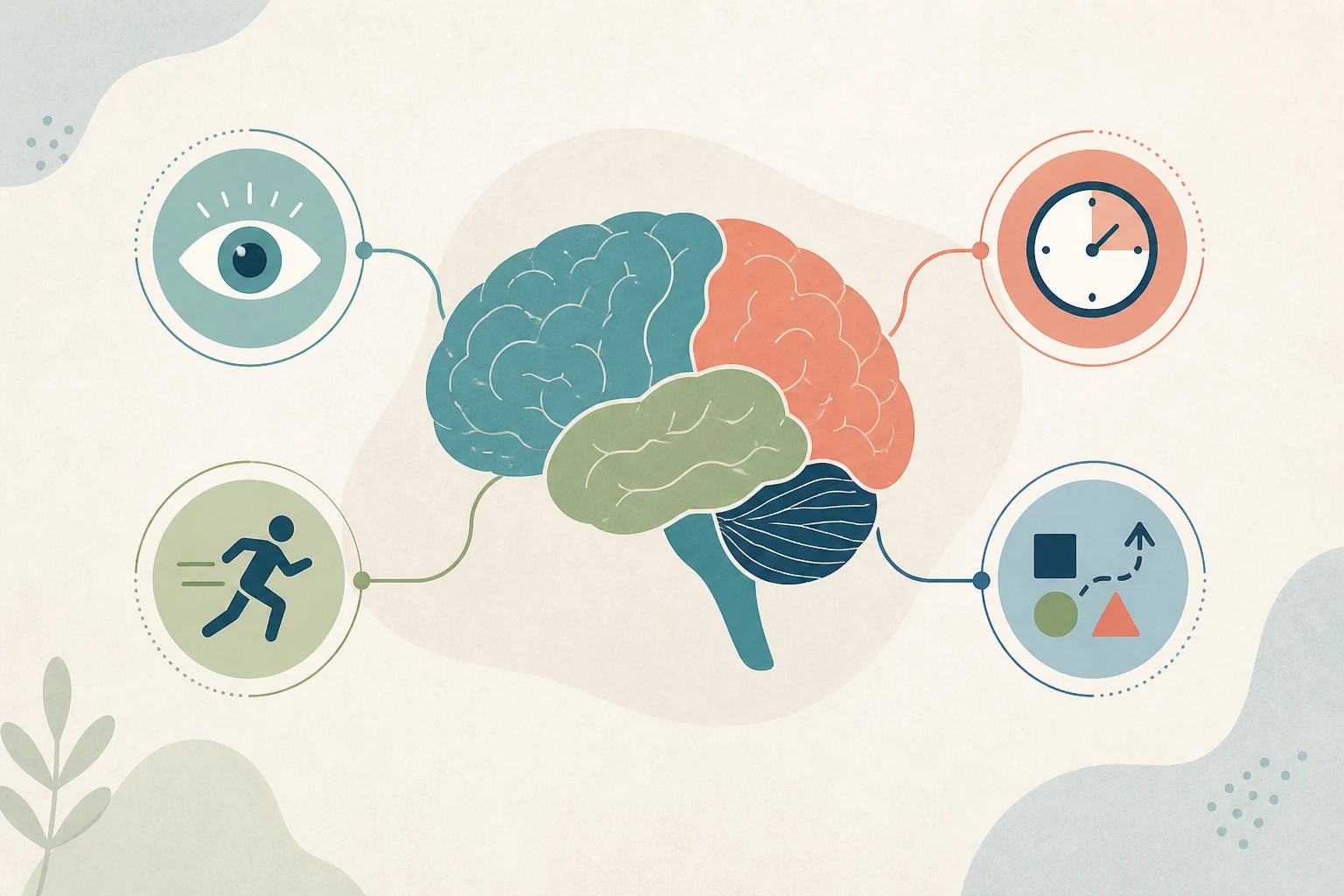
There is no single simple cause of ADHD. Current research points to a mix of genetic, developmental, and environmental influences. ADHD often runs in families, and genes appear to play an important role. Research has also examined brain structure and activity, early development, prenatal exposures, premature birth, low birth weight, lead exposure, sleep, and other factors. None of these should be used to blame a person or parent. They are risk patterns, not moral explanations.
Brain-based ADHD research often focuses on networks involved in executive function. Executive function is the set of mental skills that helps people plan, hold information in mind, pause before acting, manage time, shift between tasks, and resist distractions. When these systems are harder to regulate, the result may look like inattention, impulsivity, emotional reactivity, procrastination, inconsistent performance, or hyperactive behavior.
This is also why ADHD symptoms can change with age. A young child may show more obvious physical movement. A teenager may struggle with deadlines, sleep routines, emotional intensity, or risky decisions. An adult may look outwardly calm but feel internally restless, overloaded, and chronically behind. The same underlying regulation difficulties can take different shapes as life demands change.
ADHD Symptoms Linked to Hyperactivity
Hyperactivity and impulsivity can show up in several ways. Common signs include frequent fidgeting, leaving a seat when staying seated is expected, feeling restless, talking excessively, interrupting, acting quickly without considering the result, difficulty waiting, and needing a high level of stimulation. In adults, these signs may appear as impatience in meetings, overcommitting, speeding through decisions, feeling bored quickly, or using constant busyness to manage discomfort.
Inattention can travel with hyperactivity, even when the person does not notice it at first. ADHD symptoms may include losing things, missing instructions, forgetting everyday tasks, drifting in conversation, avoiding effortful tasks, struggling to organize details, or starting many projects without finishing them. Combined patterns are common, which is why someone searching for hyperactivity meaning may also need to look at attention, memory, planning, and impulse control.
A helpful self-reflection question is whether the pattern is persistent, cross-situational, and impairing. Persistent means it has been present for a long time, not only during one stressful week. Cross-situational means it appears in more than one place, such as work and home. Impairing means it causes repeated problems, not just occasional inconvenience. If those three features fit, it may be worth using a structured ADHD assessment experience to collect examples in a clearer way before talking with a qualified professional.
When Hyperactivity Might Not Be ADHD
Not every restless or impulsive period points to ADHD. Sleep deprivation can make attention and impulse control worse. Anxiety can create racing thoughts and a constant sense of urgency. Depression can affect concentration and motivation. Trauma, grief, stress, thyroid issues, medication effects, substance use, high caffeine intake, and major life transitions can also change energy and focus.
Context is especially important for children. Many children are energetic, curious, and inconsistent while their brains and routines are still developing. The concern rises when behaviors are more frequent or intense than expected for age, occur across settings, and interfere with learning, safety, friendships, or family life. For adults, the question often becomes whether the same struggles were present earlier in life, even if they were hidden by intelligence, structure, family support, or high effort.
This is why a careful clinical evaluation looks beyond a single symptom. It may include personal history, current symptoms, rating scales, input from family or teachers when appropriate, sleep and health review, and screening for conditions that can look similar. Online tools can support reflection, but they cannot replace that broader process.

How to Think About an ADHD Test or Screening
Many people search for an ADHD test when they are trying to name a confusing pattern. That search makes sense, but the word test can create unrealistic expectations. ADHD is not identified by one online score alone. A screening questionnaire can highlight whether your answers resemble common ADHD patterns, while a professional evaluation considers history, impairment, development, context, and other possible explanations.
A good self-screening experience should feel clarifying rather than pressuring. It should explain that results are informational, protect privacy as much as possible, and encourage next steps without promising certainty. It should also help you separate traits from identity. You are not a score. You are collecting clues about how attention, activity level, and self-regulation show up in your life.
Before using any ADHD screening tool, consider writing down examples. When do symptoms show up? What makes them better or worse? Did similar patterns appear in childhood? What systems already help? What problems keep repeating despite effort? These notes can make any later conversation with a clinician, counselor, coach, school team, or workplace support person more concrete.

Practical Next Steps If Hyperactivity Feels Familiar
If this article made your experience feel more organized, the next step is not to panic or self-label too quickly. Start with observation. Track a few situations where hyperactivity, impulsivity, or attention problems affect your day. Notice sleep, stress, environment, caffeine, deadlines, emotions, and task type. Patterns are easier to understand when they are visible.
You can also try low-risk supports. Reduce friction around important tasks, use timers, break work into smaller starts, keep visual reminders where you actually look, schedule movement breaks, and reduce avoidable distractions. These strategies do not prove or disprove ADHD, but they can show which supports make life easier.
If symptoms are causing repeated problems, consider speaking with a qualified healthcare or mental health professional. Bring examples rather than only conclusions. For children and teens, parents may also involve school staff when learning or behavior is affected. For adults, support may involve clinical care, therapy, medication discussions, workplace accommodations, coaching, or practical systems.
ADHDAssessment.me fits best as a supportive early step. Its 18-question experience is designed to help people reflect on ADHD traits, review results, and decide whether further conversation makes sense. You can use the ADHD traits reflection tool as part of that early information-gathering process, while remembering that online screening is not a substitute for professional advice.

FAQ
What is mental hyperactivity?
Mental hyperactivity is a casual phrase people use when thoughts feel unusually fast, crowded, or hard to settle. It can overlap with ADHD, especially when it comes with restlessness or impulsive decisions, but it can also relate to anxiety, stress, poor sleep, mood changes, or other factors.
What is hyperactivity disorder?
People often use hyperactivity disorder to mean ADHD, or attention-deficit/hyperactivity disorder. More precisely, hyperactivity is one ADHD symptom cluster. ADHD can also involve inattention and impulsivity, and some people have few visible hyperactive behaviors.
Is ADHD a mental illness?
ADHD is most often described as a neurodevelopmental disorder. It is also handled within mental health care because it affects attention, behavior, emotions, and daily functioning. Calling it a mental health condition does not mean it is a personal weakness.
Is ADHD a mental illness or neurological disorder?
It is reasonable to think of ADHD as both brain-based and relevant to mental health. The neurological or neurodevelopmental framing explains its connection to brain development and regulation. The mental health framing explains why clinicians, therapists, schools, and families may address its effects on daily life.
What is a hyperactive brain?
A hyperactive brain is not a formal label. People usually mean a brain that feels busy, restless, stimulus-seeking, or hard to slow down. In ADHD, this may relate to self-regulation and executive function, but the phrase alone does not identify one specific condition.
What are common ADHD symptoms in adults?
Adult ADHD symptoms may include restlessness, impatience, interrupting, disorganization, forgetfulness, procrastination, missed details, time-management problems, emotional reactivity, and inconsistent follow-through. Some adults look calm outwardly while feeling very restless internally.
What should I do if I think I have ADHD symptoms?
Start by collecting examples of what you notice, when it happens, and how it affects daily life. A screening tool can help organize those observations. If the pattern is persistent or disruptive, consider discussing it with a qualified professional who can review your full history and context.